Quantitative Analysis is a method of analyzing the stock market using mathematical models, statistical data, calculations, and numerical measurements to make investment or trading decisions.
Instead of relying mainly on emotions, news, or market opinions, quantitative analysis focuses on hard data and numbers.
It is widely used by:
- Institutional investors
- Hedge funds
- Algorithmic traders
- Quant traders
- Investment banks
The main goal of quantitative analysis is to identify profitable opportunities using data-driven strategies.
What is Quantitative Analysis?
Quantitative Analysis studies measurable financial data such as:
- Revenue
- Profit
- Earnings
- Ratios
- Volume
- Price movement
- Volatility
- Historical performance
This analysis uses formulas, statistics, and computer models to evaluate stocks and market behavior.
Key Areas of Quantitative Analysis
1. Financial Ratios
Quantitative analysts study important company ratios like:

Earnings Per Share (EPS)
EPS=Outstanding SharesNet Profit
Measures company profitability per share.
Price-to-Earnings (P/E) Ratio
P\/E=EPSMarket Price
Helps determine whether a stock is overvalued or undervalued.
Debt-to-Equity Ratio
Measures company financial risk and debt level.

2. Statistical Analysis
Quantitative analysis uses statistics to study:
- Market trends
- Price behavior
- Volatility
- Correlation
- Probability
This helps traders make logical and data-based decisions.
3. Algorithmic & Automated Trading
Many quantitative traders use algorithms and computer programs to:

- Detect patterns
- Execute trades automatically
- Analyze large amounts of market data quickly
This is commonly called:
- Algo Trading
- Quant Trading
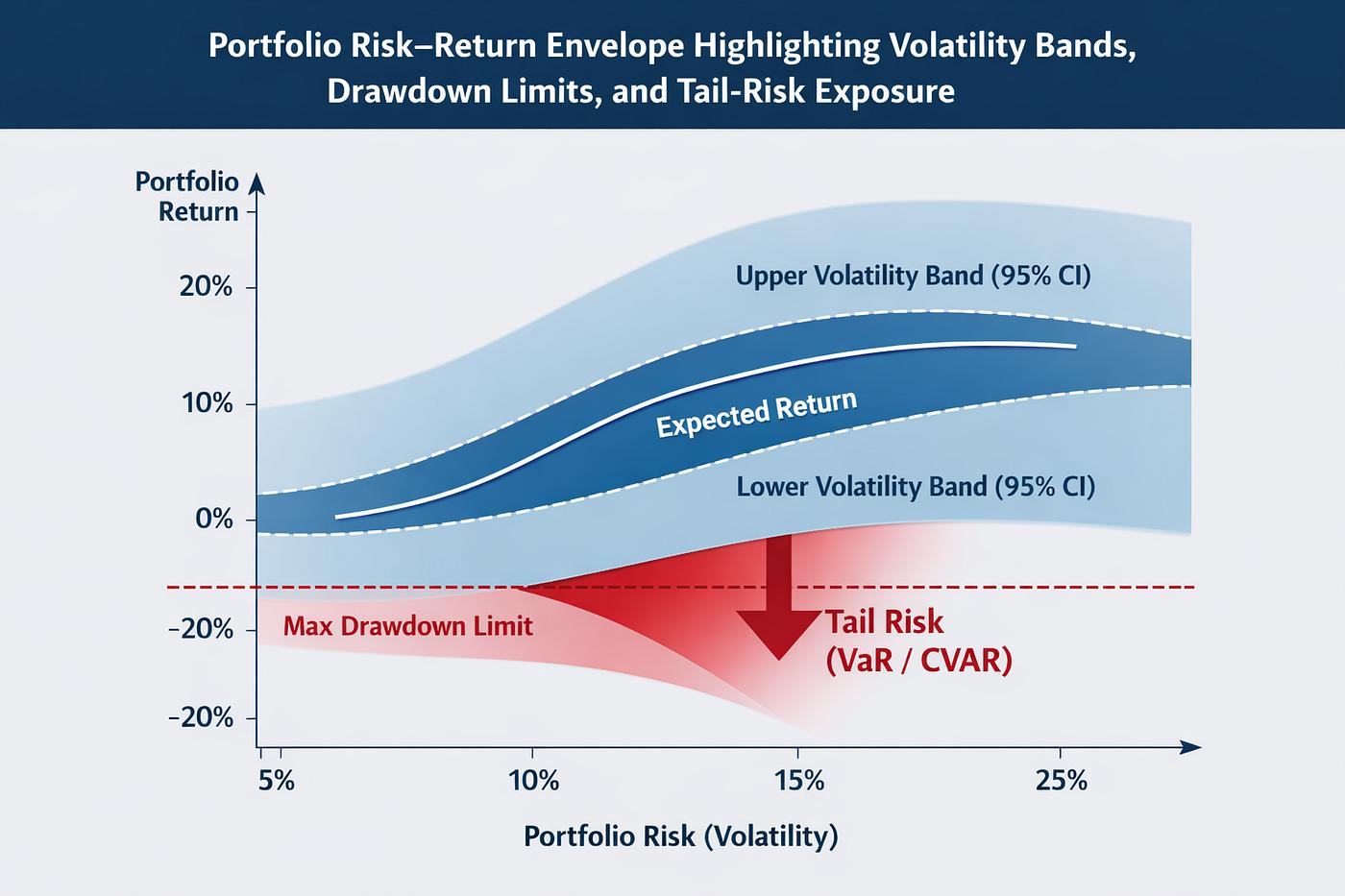
4. Risk Analysis
Quantitative models help measure:
- Portfolio risk
- Market volatility
- Loss probability
- Risk-reward ratio
Risk management is one of the most important parts of quantitative analysis.
Advantages of Quantitative Analysis
Data-driven decision making
Reduces emotional trading
Helps analyze large market data quickly
Useful for algorithmic trading
Improves risk management
Limitations of Quantitative Analysis
Requires mathematical and statistical knowledge
Complex models may fail in unexpected market conditions
Historical data may not always predict future markets
Heavy dependence on technology and data quality
Conclusion
Quantitative Analysis is a powerful method that uses numbers, statistics, and mathematical models to analyze the stock market. It helps traders and investors make objective, data-driven decisions instead of emotional decisions.
In modern financial markets, quantitative analysis plays a major role in algorithmic trading, portfolio management, and institutional investing. When combined with proper risk management and market understanding, it can become a highly effective approach for analyzing market opportunities.