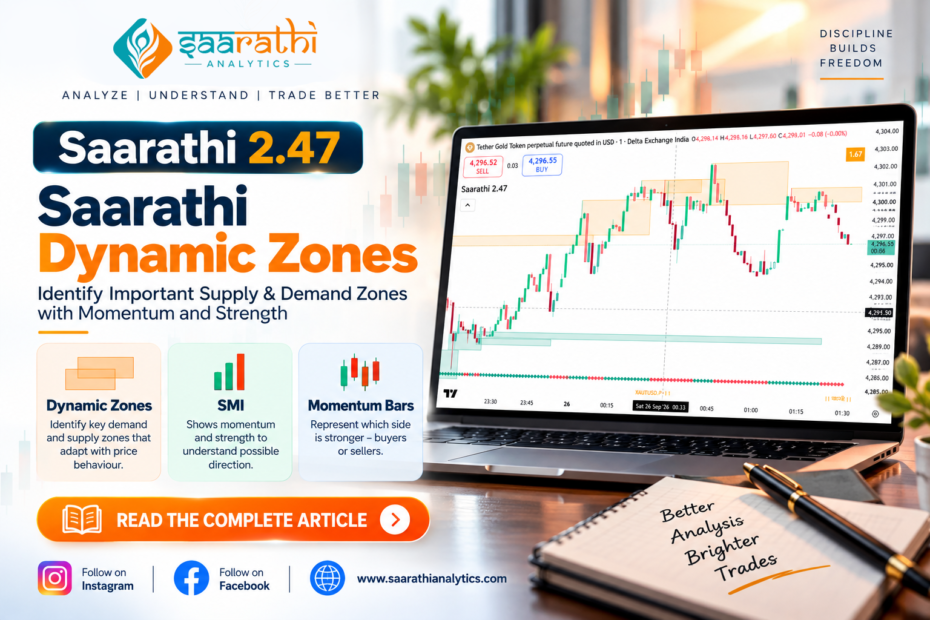
Saarathi 2.47 — Dynamic Zones
Saarathi 2.47 – Dynamic Zones helps traders understand important price zones along with momentum, strength, and market direction. A simple framework designed to bring clarity to chart analysis and trading decisions.
Saarathi 2.47 – Dynamic Zones helps traders understand important price zones along with momentum, strength, and market direction. A simple framework designed to bring clarity to chart analysis and trading decisions.
Multi-Timeframe Analysis helps us understand the bigger market picture before focusing on execution. Explore how Major and Minor Timeframes work together within the Saarathi Ecosystem.
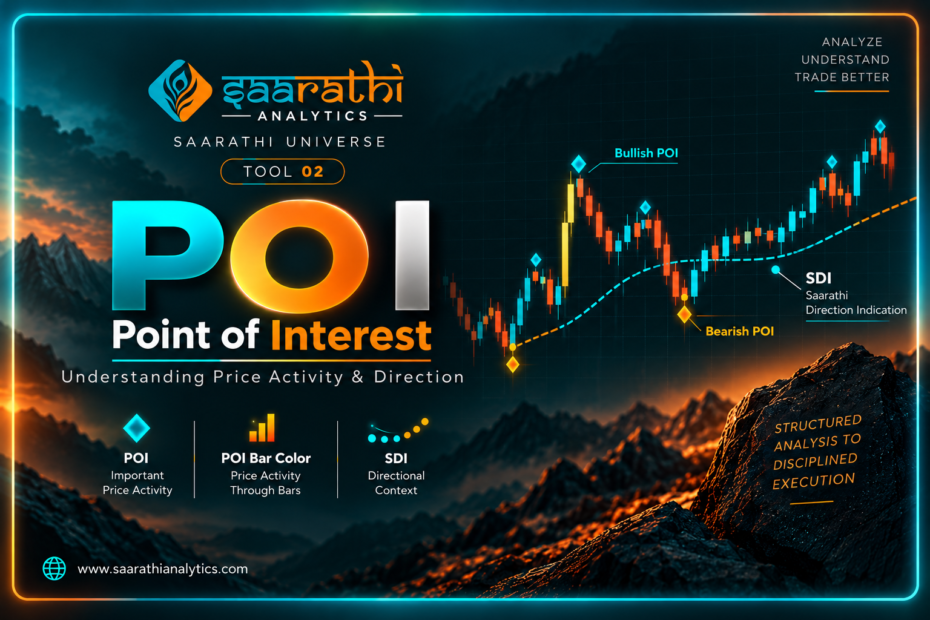
Understand important price activity and its direction with POI — a simple, focused framework for clearer and more structured market analysis.
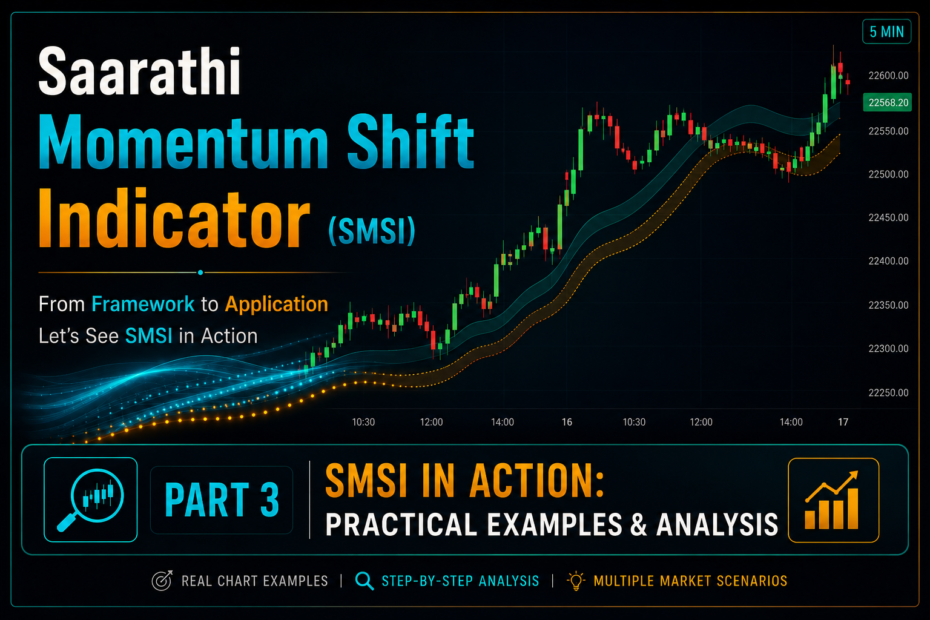
Take the SMSI framework to real chart situations through practical examples, step-by-step analysis, and different market scenarios.
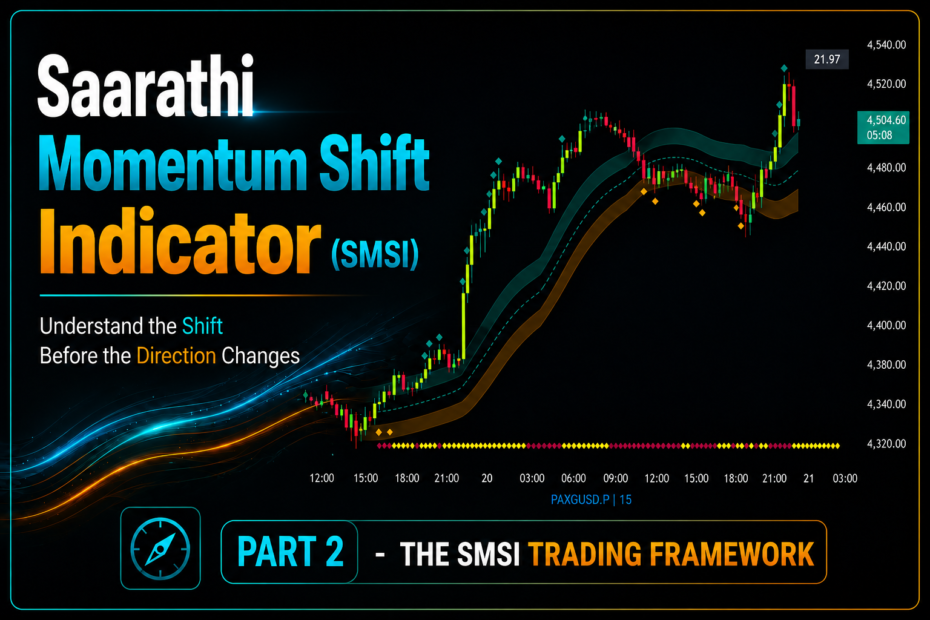
Bring the individual SMSI components together into a structured workflow — moving from direction and market context to momentum, price behaviour, confirmation, and decision-making.
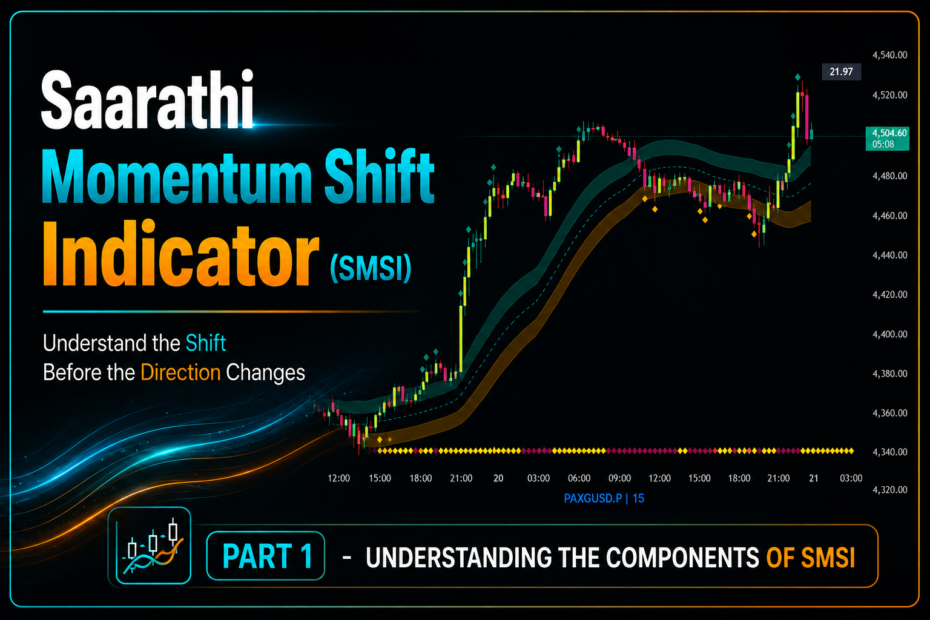
Explore the key components of SMSI and understand how each one helps you observe market direction, momentum, price behaviour, and changing market conditions.

Top-Down Analysis is an investment and market analysis method where traders and investors start by analyzing the overall economy and market conditions first, then move toward sectors, industries, and finally individual stocks. Instead of directly…
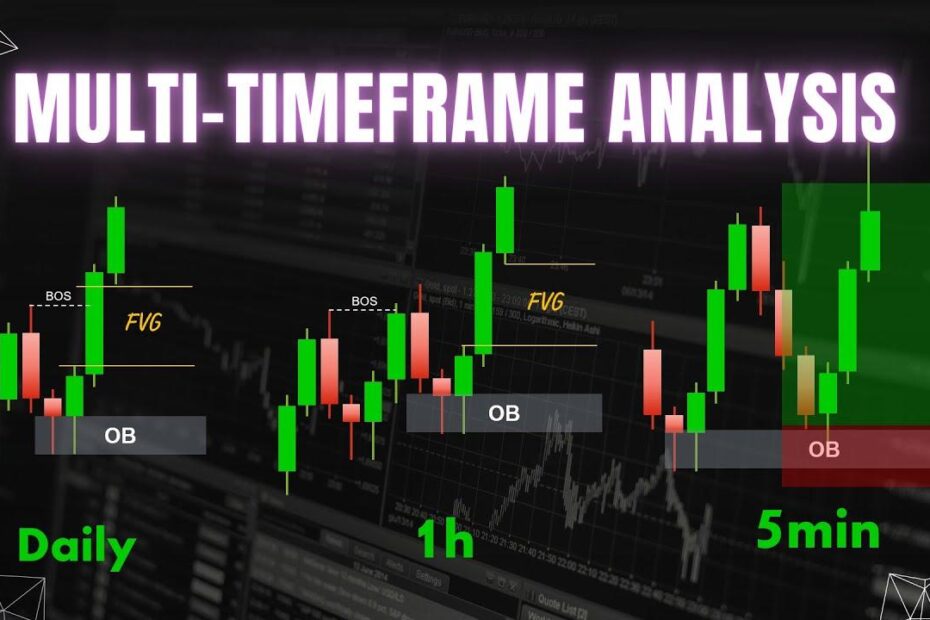
Multi-Timeframe Analysis is a trading method where traders analyze the same stock or market across multiple timeframes to understand the bigger trend and find more accurate entry and exit points. Instead of depending on only…

Intermarket Analysis is the study of how different financial markets influence each other. It helps traders and investors understand the connection between stocks, commodities, bonds, currencies, and global markets to predict overall market direction. Financial…

Sector Analysis is the process of studying different sectors or industries in the stock market to identify which sectors are performing strongly and which sectors are weak. Instead of analyzing only individual stocks, sector analysis…
Smart Money / ICT Analysis is an advanced trading approach that focuses on how institutional traders, banks, hedge funds, and large market participants move the market. The concept became highly popular through ICT (Inner Circle…
Options Analysis is the process of studying options data, market behavior, volatility, open interest, and option pricing to understand market sentiment and predict possible price movement. In the stock market, options are powerful financial instruments…