Sector Analysis is the process of studying different sectors or industries in the stock market to identify which sectors are performing strongly and which sectors are weak.
Instead of analyzing only individual stocks, sector analysis focuses on the overall performance, growth potential, trends, and economic impact of an entire industry.
It is widely used by:
- Investors
- Swing traders
- Institutional investors
- Portfolio managers
- Market analysts
Sector Analysis helps traders and investors identify where money is flowing in the market and which industries may provide better opportunities.
What is Sector Analysis?
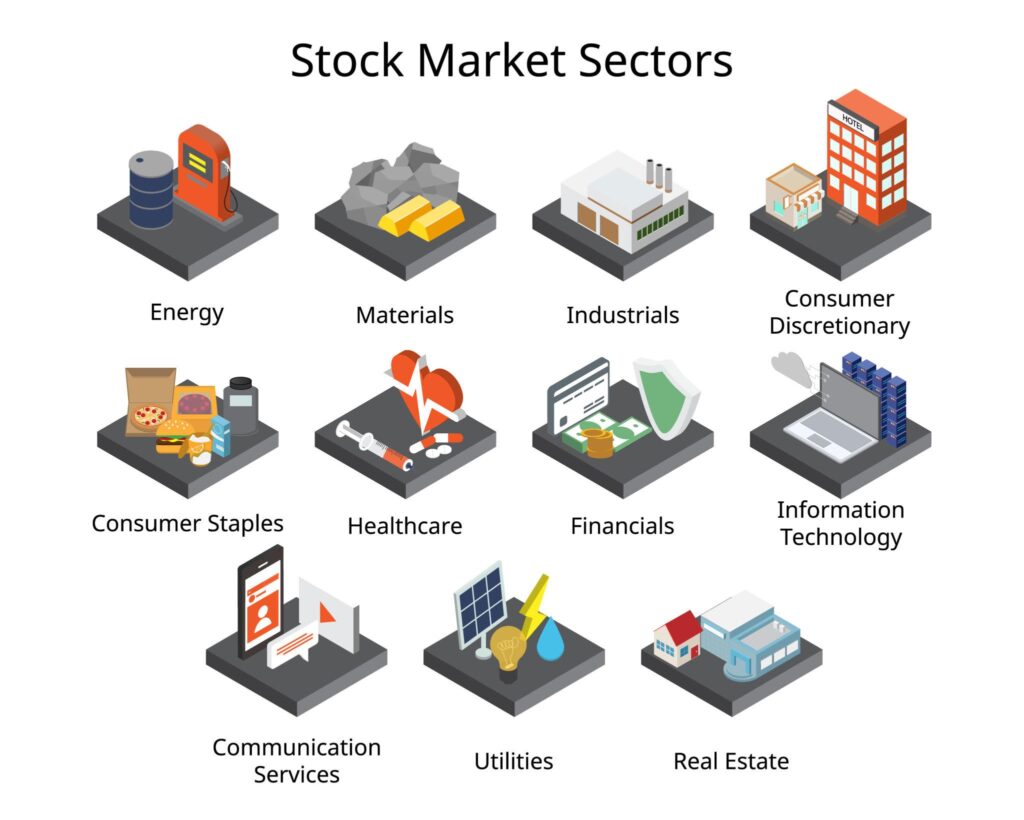
The stock market is divided into different sectors such as:
- Banking
- IT
- Pharma
- FMCG
- Auto
- Energy
- Realty
- Metal
- Telecom
Sector Analysis studies how these industries perform under different economic and market conditions.
The main goal is to identify:
- Strong sectors
- Weak sectors
- Growth opportunities
- Sector rotation trends
Why Sector Analysis is Important
Even when the overall market is weak, some sectors may still perform strongly.
Example:
- During economic growth, banking and auto sectors may rise
- During uncertainty, pharma and FMCG may perform better
This helps traders focus on sectors where momentum and opportunities are strongest.
Key Factors in Sector Analysis
1. Economic Conditions
Different sectors react differently to the economy.
Growing Economy
Strong sectors:
- Banking
- Realty
- Auto
- Infrastructure
Weak Economy
Defensive sectors:
- FMCG
- Pharma
- Utilities

2. Government Policies
Government decisions strongly impact sectors.
Examples:
- EV policy → Auto sector
- Infrastructure spending → Cement & construction
- Interest rate changes → Banking sector

3. Global Market Trends
International events can affect sectors.
Example:
- Rising crude oil impacts airline and paint companies
- Global IT demand affects technology stocks
4. Earnings & Financial Growth

Investors analyze:
- Revenue growth
- Profit margins
- Future guidance
- Industry demand
Strong sector earnings often attract institutional investment.
Sector Rotation
Sector Rotation refers to the movement of money from one sector to another based on market conditions.
Example:
- Bull market → Banking, Auto, Realty
- Defensive market → FMCG, Pharma
Professional investors track sector rotation to identify upcoming opportunities early.
Types of Sectors
Cyclical Sectors
These sectors perform according to economic cycles.
Examples:
- Auto
- Realty
- Metal
- Banking
Defensive Sectors
These sectors remain relatively stable during market uncertainty.
Examples:
- FMCG
- Pharma
- Utilities
Tools Used in Sector Analysis
- Sector indices
- Relative strength analysis
- Volume analysis
- Financial reports
- Market trends
- Economic data
Traders often compare sector performance with benchmark indices like:
- Nifty 50
- Sensex
Advantages of Sector Analysis
Helps identify strong industries
Improves stock selection
Tracks institutional money flow
Useful for long-term investing
Helps understand economic trends
Limitations of Sector Analysis
Sector trends can change quickly
External events may impact industries suddenly
Strong sector does not guarantee every stock will perform well
Requires regular market tracking
Conclusion
Sector Analysis is an important method used to understand which industries are leading or lagging in the stock market. By tracking sector performance, economic trends, and institutional money flow, traders and investors can identify high-potential opportunities more effectively.
Successful market participants often combine sector analysis with technical analysis, fundamental analysis, and risk management to build stronger trading and investment strategies.